
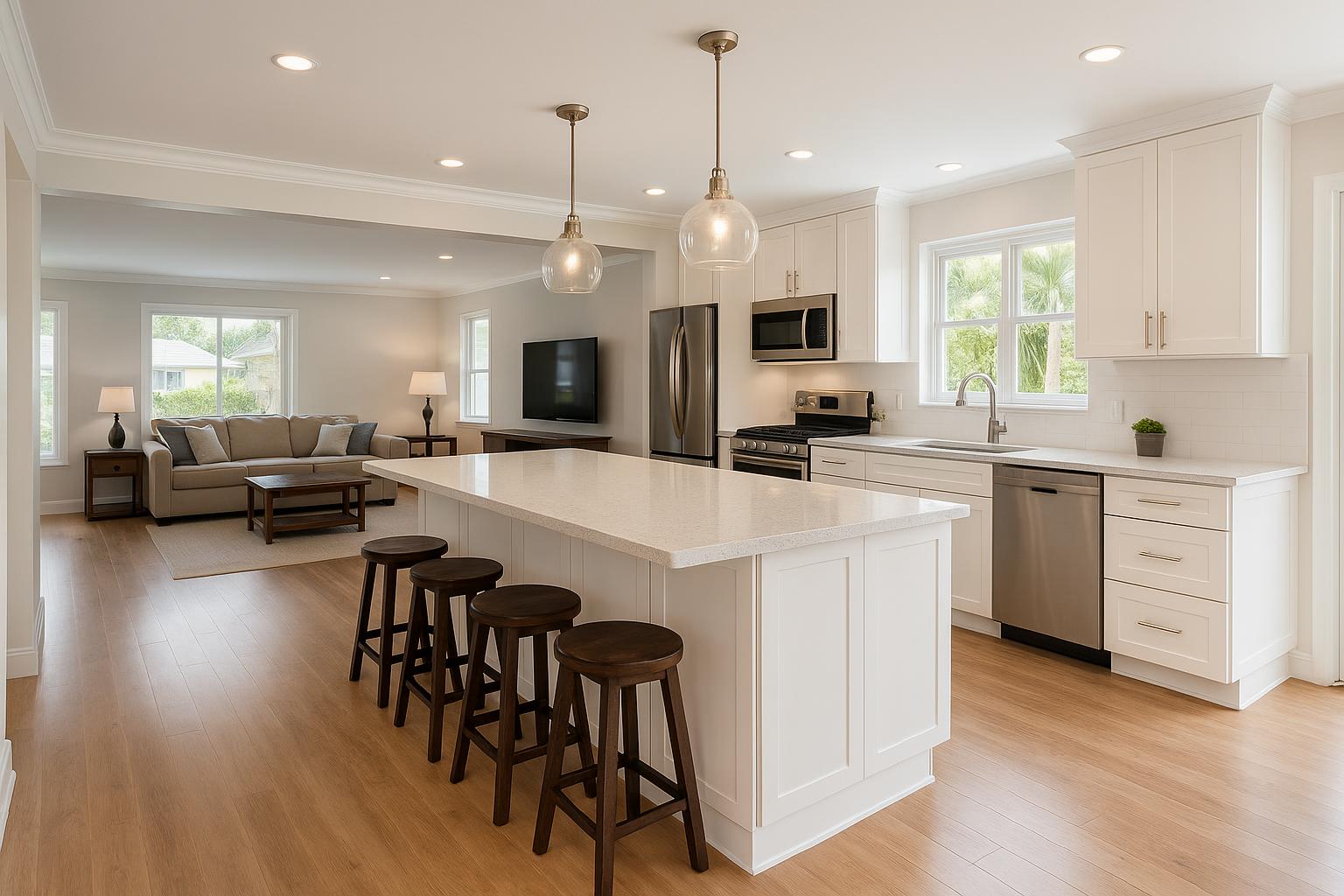
The Open Concept Dream — And the Reality Behind It
It's one of the most common requests we hear from homeowners across Fort Lauderdale: "Can we just take out that wall?"
The appeal of an open concept kitchen is easy to understand. You want to see your kids while you cook. You want guests to flow between the kitchen and living room during a party. You want more natural light, a bigger feel, and a modern look that matches how you actually live.
But removing a wall isn't always as simple as it looks on TV. Before you grab a sledgehammer — or hire someone who would — there are real structural, financial, and design questions you need to answer first.
Here's an honest breakdown of what it takes to open up a kitchen, when it makes sense, and when it might not be the right move for your home.
First Things First: Is the Wall Load-Bearing?
This is the single most important question in any wall removal project, and it's the one that determines everything else — timeline, budget, and feasibility.
A load-bearing wall supports the weight of the structure above it. Remove it without proper engineering, and you're looking at sagging ceilings, cracked drywall, or worse. A non-load-bearing wall (sometimes called a partition wall) simply divides space and can usually be removed with far less complexity.
How do you know which one you're dealing with? You don't — not without a professional assessment. In many Fort Lauderdale homes, especially older builds and mid-century ranch-style houses, walls that seem minor can actually be structural. A licensed contractor or structural engineer can evaluate your home's framing and tell you exactly what you're working with.
What Happens If It Is Load-Bearing?
Removing a load-bearing wall doesn't mean the project is off the table. It means you'll need a support beam (often a steel I-beam or engineered LVL beam) installed to carry the load that the wall was handling. This adds cost and complexity, but it's done safely every day in remodeling projects across South Florida.
Expect the beam installation alone to add anywhere from $2,000 to $10,000 or more to your project, depending on the span, the material needed, and whether new footings or columns are required.
Permits and Code: What Fort Lauderdale Requires
In Broward County, structural modifications — including wall removal — require a building permit. This isn't optional, and skipping it can create serious problems when you try to sell your home or file an insurance claim down the road.
The permitting process in Fort Lauderdale typically involves submitting plans that show the existing structure and the proposed changes, along with engineering documents if load-bearing elements are involved. A reputable remodeling contractor handles this process for you, but it's worth understanding that permits add time — usually a few weeks — to your project timeline.
Hidden Surprises Inside the Wall
Walls aren't just drywall and studs. Before removal, your contractor needs to account for what's running through them:
- Electrical wiring: Outlets, switches, and circuits often run through interior walls. These need to be rerouted, which means electrical work and possibly a new panel configuration.
- Plumbing: If the wall is near your kitchen sink or backs up to a bathroom, there may be supply lines or drain pipes inside. Rerouting plumbing is doable but adds to the scope and cost.
- HVAC ductwork: In some Fort Lauderdale homes, especially those with central air systems routed through interior walls, you may find ductwork that needs to be relocated.
- Gas lines: Less common in South Florida kitchens, but if your home has a gas range, the supply line may pass through a nearby wall.
None of these are dealbreakers. But they're the reason a proper assessment before demolition is essential. Surprises mid-project are what blow budgets — not the planned work.
Design Considerations You Might Not Think About
Opening up a kitchen changes more than the floor plan. It changes how the entire space looks, sounds, and functions. Here are a few things homeowners often overlook:
Storage Loss
That wall you want to remove? It might be where your upper cabinets live. Losing a wall means losing cabinet and counter space. A good kitchen designer will plan for this with an island, a pantry addition, or reconfigured cabinetry — but it needs to be part of the conversation early.
Cooking Smells and Noise
An open layout means there's nothing between your sizzling skillet and your living room couch. If you cook frequently — especially anything with strong aromas — consider whether a fully open concept is right for you, or whether a partial wall or a large pass-through opening might give you the best of both worlds.
Visual Clutter
Closed kitchens hide messes. Open kitchens put everything on display. If you're going open concept, plan for clean sightlines — integrated appliances, consistent finishes, and enough storage to keep countertops clear.
Flooring Transitions
When a wall comes down, you're often merging two rooms with different flooring. Matching or replacing flooring across the combined space is a common add-on cost that homeowners don't always budget for upfront.
When Opening Up the Kitchen Makes Perfect Sense
Despite the considerations above, an open concept kitchen remodel is one of the most impactful changes you can make to a home. It tends to work especially well when:
- Your current kitchen feels dark, cramped, or isolated from the rest of the house
- You entertain frequently and want a better flow between cooking and socializing
- Your home has a strong natural light source on one side that an open layout would share across rooms
- You're already planning a full kitchen remodel and can incorporate the wall removal into the larger project
Many of the mid-century and 1970s-era homes throughout Fort Lauderdale, Oakland Park, and Wilton Manors were built with closed-off galley kitchens that don't match how families use their homes today. Opening those spaces up is one of the most common — and most rewarding — remodeling projects we take on.
When You Might Want to Keep the Wall
Open concept isn't always the answer. You might want to keep the wall — or explore a compromise — if:
- The wall is load-bearing and the beam cost pushes the project beyond your budget
- You prefer a defined, separate kitchen space for cooking
- The wall provides essential cabinet storage that can't easily be replaced
- You're planning to sell and the home's layout already works well for the market
A partial opening — like a wide cased opening or a half-wall with a countertop — can give you more light and connection without a full teardown.
Get a Professional Opinion Before You Decide
The best way to know whether removing a wall is worth it for your home is to have a remodeling professional walk through the space with you. At Sapphire Kitchen Remodeling, we evaluate the structure, identify what's inside the wall, and give you a clear picture of what's involved — before any work begins.
If you're in Fort Lauderdale or the surrounding areas and you've been wondering whether an open concept kitchen is possible in your home, we'd love to take a look. The answer might be simpler than you think — or it might save you from a costly mistake. Either way, you'll know exactly where you stand.