
The Unknown Is the Hardest Part of Any Remodel
You've made the decision. You're remodeling your kitchen. Maybe you've already picked out cabinets, saved a few inspiration photos, and set a budget. But there's one question that keeps nagging at you: What actually happens once the work starts?
For most Fort Lauderdale homeowners, a kitchen remodel is one of the biggest home improvement projects they'll ever take on. And the uncertainty — not knowing what each week will look like, when you'll lose access to your sink, or how messy things will get — can be more stressful than the renovation itself.
This guide walks you through every major phase of a typical kitchen remodel so you can plan ahead, set realistic expectations, and feel confident throughout the process.
Phase 1: Design and Planning
Before anyone picks up a hammer, there's a critical planning stage that sets the tone for everything that follows. This is where you and your remodeling team discuss your goals, finalize the layout, select materials, and lock in the scope of work.
During this phase, expect to:
- Review your existing kitchen's strengths and weaknesses
- Discuss your wish list and non-negotiables
- Choose cabinets, countertops, tile, fixtures, and appliances
- Finalize a detailed project plan and contract
This phase can take anywhere from a couple of weeks to a month or more, depending on how quickly decisions are made and whether permits are needed. In Fort Lauderdale, certain remodeling projects — especially those involving plumbing or electrical changes — require permits from the city, so your contractor should handle that process for you.
Pro tip: Don't rush this phase. The more thorough your planning, the smoother everything else goes.
Phase 2: Demolition
This is the part that feels both exciting and slightly terrifying. Once the project officially kicks off, the first step is tearing out the old kitchen — cabinets, countertops, flooring, backsplash, and sometimes even walls.
Demolition is loud, dusty, and fast. Most kitchen demo takes just one to three days. Your contractor should protect the rest of your home with plastic sheeting and dust barriers, but expect some disruption beyond the kitchen.
A few things to prepare for:
- You won't have access to your kitchen sink, stove, or dishwasher during the remodel
- Set up a temporary kitchen station in another room with a microwave, mini fridge, and paper plates
- If you have pets or young children, plan for them to be elsewhere on demo day
Phase 3: Rough-In Work (Plumbing, Electrical, Framing)
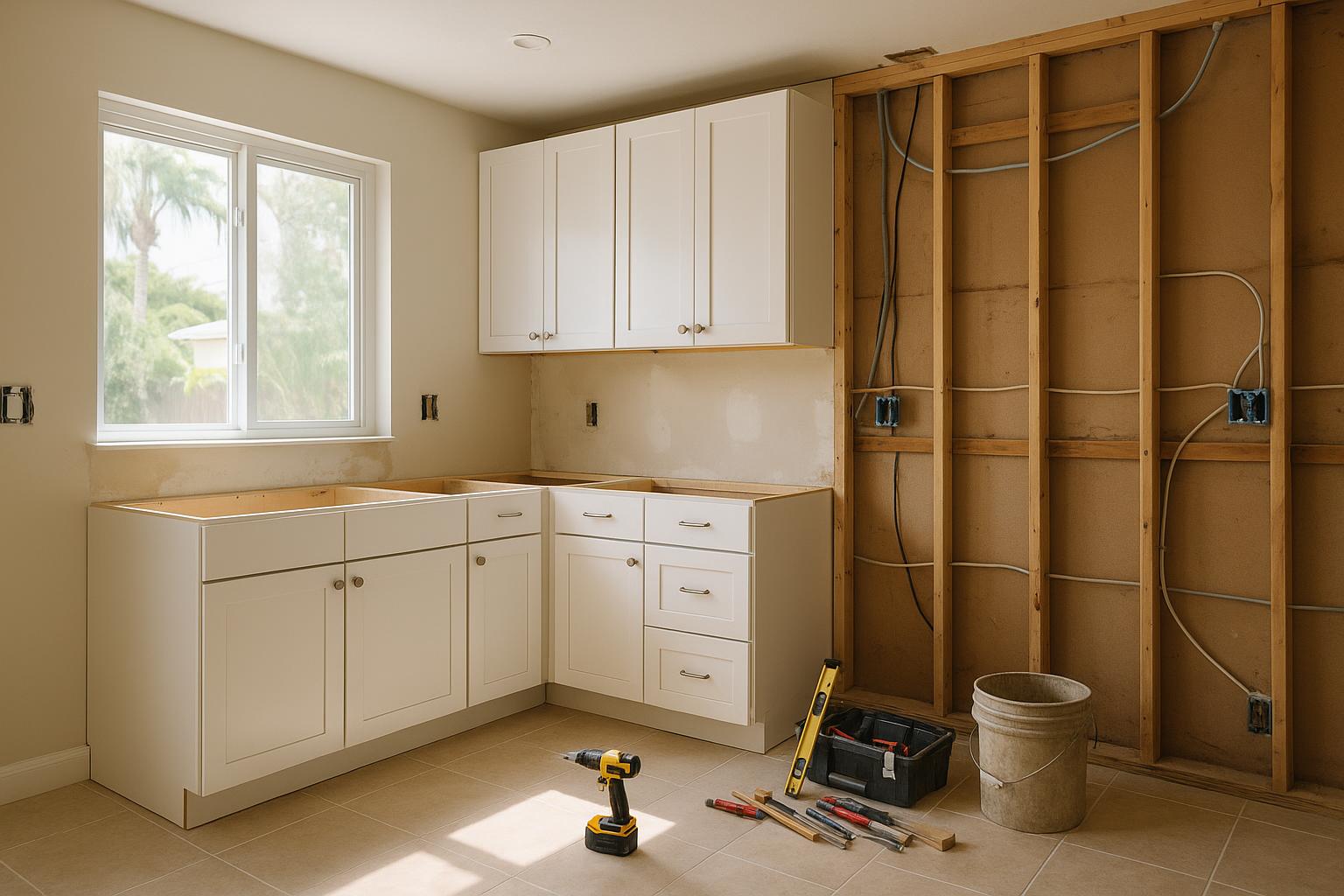
Once the old kitchen is stripped down, the behind-the-scenes work begins. This is where your contractor addresses the infrastructure — moving plumbing lines, updating electrical wiring, reinforcing walls, or adjusting the framing to accommodate the new layout.
This phase is critically important even though it won't look like much is happening. If you're relocating your sink, adding an island with electrical outlets, or upgrading to a gas range, this is when that work gets done.
In Fort Lauderdale, rough-in work typically requires an inspection before the project can move forward. Your remodeling company should coordinate this with the local building department so there are no delays.
Phase 4: Cabinet and Countertop Installation
Now things start to get exciting. Once the rough-in work passes inspection, your new cabinets go in. This is the moment the kitchen starts to take shape, and it's usually the phase where homeowners start to really see their vision coming to life.
Cabinet installation typically takes two to four days, depending on the size and complexity of the kitchen. After the cabinets are set and leveled, countertop fabricators come in to template the surfaces. The actual countertop installation usually happens a week or two later, since materials like quartz and granite need to be custom-cut.
What to know: There's often a short waiting period between cabinet installation and countertop installation. This is normal — not a delay. It's just how the fabrication process works.
Phase 5: Tile, Backsplash, and Flooring
With cabinets and countertops in place, the finish work begins. This includes installing your backsplash tile, laying new flooring, and handling any other surface work that ties the room together.
Tile work requires precision and patience. Depending on the pattern and material, a backsplash can take one to three days. Flooring timelines vary based on whether you're going with porcelain tile, luxury vinyl plank, or another material.
This is also when you'll start to see the design choices you agonized over during the planning phase finally come together — and it's usually worth every bit of that earlier indecision.
Phase 6: Fixture and Appliance Installation
In the final stretch, your plumber installs the new sink and faucet, the electrician hooks up lighting and outlets, and your appliances are set into place. Cabinet hardware goes on. Trim gets finished. Everything gets connected and tested.
This phase moves quickly but involves a lot of coordination between trades. A good remodeling team manages this scheduling so you're not left waiting for one contractor to finish before the next one can start.
Phase 7: Final Walkthrough and Punch List
Before the project is officially complete, you and your contractor should do a thorough walkthrough together. This is your chance to point out anything that needs attention — a cabinet door that's slightly off, a spot of grout that needs touching up, a drawer that doesn't close smoothly.
This is called the punch list, and every reputable remodeling company treats it seriously. No kitchen remodel is truly finished until you're satisfied with every detail.
How to Make the Process Easier on Yourself
A kitchen remodel is a temporary disruption for a long-term improvement. Here are a few practical ways to reduce stress during the project:
- Meal prep in advance. Stock up on easy meals, plan for takeout nights, and set up that temporary kitchen early.
- Communicate openly. Ask your contractor questions whenever something is unclear. No question is too small.
- Make decisions early. Delayed material selections are one of the most common causes of project delays.
- Be flexible. Even well-planned projects hit minor bumps. A little patience goes a long way.
Ready to Start Planning Your Kitchen Remodel?
At Sapphire Kitchen Remodeling, we guide Fort Lauderdale homeowners through every phase of the remodeling process — from that first design conversation to the final walkthrough. We believe that when you know what to expect, the entire experience becomes less stressful and more enjoyable.
If you're thinking about remodeling your kitchen and want a team that communicates clearly and delivers quality work, reach out to us for a consultation. We'll walk you through exactly what your project will look like — before a single wall comes down.